Your shopping cart is empty!
Your shopping cart is empty!
Short answer: Rose water and rose oil come from the same distillation process of the Isparta rose. Rose oil is the very concentrated essential oil that collects on top of the water; it is used drop by drop and diluted. Rose water is the light distillate that remains from the distillation and carries the scent of the rose; it can be used directly on the face, on hair or in desserts. Because only 1 kg of rose oil comes from about 3-4 tons of roses, there is a big difference between the prices of the two.
Roses picked early in the morning between the end of May and mid-June are put into the stills the same day and boiled together with water. When the rising steam is cooled, two things are obtained: rose oil, which collects as a thin layer on top of the water, and the rose-scented rose water that remains underneath. We described the details of the harvest in our article on the Isparta rose harvest.
| Rose oil | Rose water | |
|---|---|---|
| Nature | Concentrated essential oil | Rose scent in water, with a small amount of rose components |
| Amount used | 1-2 drops | As much as is poured on a cotton pad, or as a spray |
| Directly on skin? | No, diluted with a carrier oil or cream | Yes, used like a toner |
| Storage | Tightly closed, in a cool, dark place | In the refrigerator after opening |
| Sales unit | Grams | Milliliters |
Because pure rose oil is very concentrated, it is not applied to the skin on its own. Usually one or two drops are added to a carrier oil, a cream or a massage oil; a very small amount can be dabbed on the inside of the wrist like perfume, or it can be used for fragrance in an incense burner. It is natural for it to thicken and crystallize in a cool environment; it opens up when warmed in the palm. For details, you can see our articles on how to use pure rose oil and why rose oil is expensive.
Rose water is most often used as a toner after facial cleansing in the morning and evening. It is also preferred as a spray on the roots of the hair, in place of water in homemade masks, or to add a few drops of fragrance to desserts such as muhallebi (milk pudding) and rice pudding. If you will use it in food, make sure its packaging states that it is suitable for food. For usage ideas, take a look at our articles on the morning and evening routine with rose water and how to apply rose water to hair.
Micellar rose water is a cleanser in which micelle structures that hold makeup and dirt have been added to rose water. Rose cologne, on the other hand, is alcohol-based and is not applied to the face. We explained the difference between the three in a separate article.
We have gathered all our articles about the Isparta rose on the Isparta Rose Guide page.
No. Rose water is not made by mixing rose oil with water; the two are obtained together in the same distillation. Products made by adding water and essence to rose oil are not real rose water.
Pure rose oil is very concentrated; it is recommended to dilute it with a carrier oil or cream before applying it to the face. Test it on a small area on first use.
Rose oil is much more valuable: 1 kg of oil is obtained from about 3-4 tons of roses. Rose water, on the other hand, is an affordable and practical product for daily use.
Rose water stated to be suitable for food can be added to desserts a few drops at a time. Do not use rose waters made for cosmetic purposes in food.
This article is for general information purposes only. Before using cosmetic products for the first time, test them on a small area. If you have persistent redness, itching or a skin problem, consult a dermatologist.
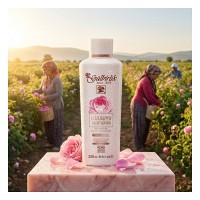 Çok al az öde
%10'a varan indirim
5 adet al: tanesi 324.00TL
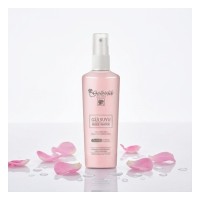 Çok al az öde
%8'e varan indirim
3 adet al: tanesi 202.39TL
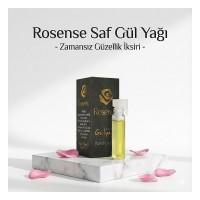 Çok al az öde
%3'e varan indirim
2 adet al: tanesi 1,260.03TL
 Çok al az öde
%8'e varan indirim
3 adet al: tanesi 5,510.80TL
Write a Review